Residential yards · Mint Hill, North Carolina

Landscaping services for a more welcoming Mint Hill yard

Make the next step easier—whether your property needs a thoughtful refresh, seasonal cleanup, planting, trimming, mulch, ongoing care, or a closer look at troublesome runoff.

Talk through your project: (704) 931-8889

01

Residential focus
Practical help for yards, beds, shrubs, and outdoor spaces.

02

Mint Hill centered
Requests focus on local properties and nearby communities.

03

Simple quote process
Explain the need, discuss the site, and review an estimate.

A useful first conversation

Find the right scope for your landscape

A yard can feel unfinished for many reasons: beds have lost their shape, shrubs block windows, runoff cuts across the lawn, or a once-manageable space has simply become overgrown. A good quote request starts by identifying what is happening now and what you want to improve.

This website helps property owners looking for a landscaper in Mint Hill, NC describe their needs and connect with an appropriate local landscaping professional. It does not represent that every service is available for every property; fit, timing, and project details are confirmed during the quote process.

Improve what is already there

Residential landscape renovation without starting over

An older landscape may need editing more than a complete redesign. Keeping healthy, well-placed plants can control cost and preserve character while the areas that no longer work are reshaped.

Update overgrown or outdated beds

Begin by identifying plants worth keeping, shrubs that can recover through selective pruning, and material that has outgrown its location. Bed lines can then be clarified, gaps replanted, and crowded areas simplified. This staged approach can improve curb appeal without rebuilding the entire front yard.

Create lower-maintenance planting areas

Low maintenance does not mean no maintenance. It usually means fewer plant varieties, appropriate mature sizes, repeated plant groupings, accessible bed shapes, and less reliance on shrubs that require constant shearing. The right plan also leaves room for airflow and future growth.

Use edging to give beds definition

A clean boundary separates lawn from planting areas, makes mowing simpler, and helps mulch stay where intended. Natural-cut edges create a soft look but need periodic renewal; installed edging may last longer but should suit the grade, drainage, and style of the property.

Prepare Piedmont clay thoughtfully

Before planting, check how quickly the area drains and whether construction traffic or foot traffic has compacted the soil. Broad bed preparation and organic matter may help some sites, but digging an isolated amended pocket in poorly draining clay can hold water around roots. Plant depth and final grade are just as important as amendments.

From reset to routine care

Landscaping services for the way you use your yard

Start with one priority or share the full list. Related work can often be grouped into a sensible sequence.

Landscape design & improvements

Rework tired beds, improve visual balance, define useful areas, and choose a practical direction based on sun, space, upkeep preferences, and budget.

Discuss an improvement project

Planting & bed installation

Create or refresh planting beds with attention to mature plant size, sunlight, moisture, seasonal interest, spacing, and the realities of Piedmont soil.

Request planting help

Mulch installation

Give beds a finished edge while helping retain moisture and moderate soil temperature. Many beds need roughly two to three inches total—not that much added every year—and clear space around trunks, stems, foundations, and drainage paths.

Plan a mulch refresh

Shrub & hedge trimming

Restore clearance, shape, and scale with care suited to the plant. Selective pruning can support airflow and long-term structure; repeatedly shearing every shrub may create dense outer growth while hiding decline inside.

Ask about trimming

Seasonal yard cleanup

Address leaf fall, light storm debris, winter-damaged material, weeds, bed edges, and seasonal buildup. Timing the cleanup around plant needs helps avoid cutting healthy growth or disturbing beds too early.

Schedule a cleanup conversation

Overgrowth & property cleanup

Sort out volunteer growth, crowded beds, vines, and neglected corners. A selective plan may preserve worthwhile plants while making the yard manageable again.

Describe an overgrown area

Lawn & landscape maintenance

Discuss recurring or periodic attention for lawn edges, beds, shrubs, weeds, and seasonal tasks, with the exact visit scope established in advance.

Ask about maintenance

Drainage, grading & erosion concerns

Watch for standing water a day after rain, exposed roots, soil moving downhill, washed-out mulch, bare channels, or persistently soggy turf. Landscape-based options may help some sites; complex foundation or engineering issues may need a specialist.

Share a water concern

More than a tidy front yard

Why homeowners improve their landscaping

Good landscaping supports how a property looks, drains, grows, and feels day to day. The best improvements solve the most important problems first.

Curb appeal

Defined beds, balanced plantings, clear walkways, and intentional edges make an entrance feel cared for.

Better usability

Opening crowded areas and organizing planting zones can make outdoor space easier to walk through and enjoy.

Water awareness

Understanding runoff and low spots can inform grading, planting, and bed decisions before damage worsens.

Easier maintenance

Right-sized plants and simpler bed lines can reduce repetitive trimming, weeding, and correction later.

Healthier beds

Appropriate plant selection, spacing, soil preparation, and mulching create better growing conditions.

Everyday enjoyment

A landscape that fits your routines can feel calmer, more inviting, and more connected to the home.

Choose the right type of help

Routine maintenance or a landscape improvement?

Knowing the difference helps homeowners describe the work clearly and receive a more useful estimate.

Routine maintenance

Recurring mowing, edging, weed attention, leaf removal, light trimming, and bed touchups help hold an established landscape at an agreed standard. Maintenance is best when the basic layout and plant choices already work.

Landscape improvement

Bed renovation, substantial pruning, plant removal or replacement, new planting, drainage adjustments, slope stabilization, and layout changes correct an existing problem or create a new result. This work usually needs a defined scope and site-specific estimate.

Landscaping in Mint Hill, NC

Plan for Piedmont conditions, not a catalog picture

A landscape succeeds when plant choices and improvements respond to the actual yard—its sunlight, slope, drainage, soil, exposure, and maintenance level.

Local planning lensHeat · rainfall · clay soil · storm debris · seasonal change
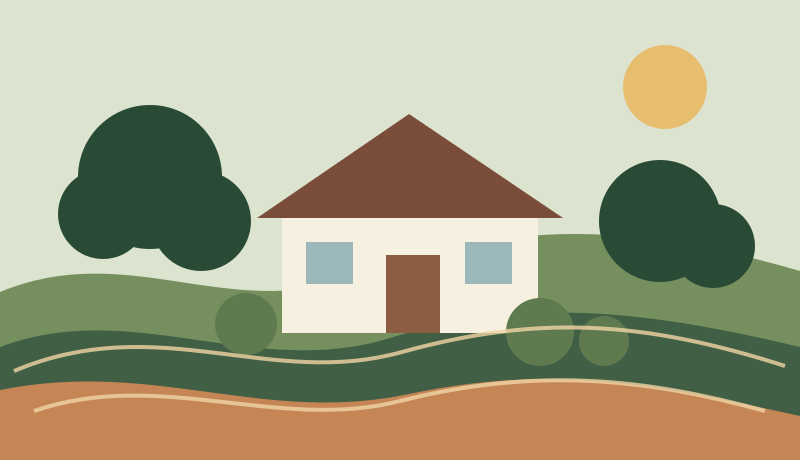
Illustration of a home landscape with layered planting beds and trees

Hot, humid summers

Summer heat and humidity can stress newly installed plants and increase watering needs. Plant choice, planting timing, root-zone mulch, and realistic maintenance expectations all matter.

Heavy rain, slopes, and runoff

Strong rain can expose low spots, compacted areas, eroding slopes, and downspout discharge problems. Observe the yard during and after rainfall, and note where water enters, flows, and remains. On slopes, keeping soil covered with suitable roots, mulch, or another planned surface can reduce splash and surface loss, but concentrated runoff may need a more durable drainage approach.

Clay-heavy Piedmont soil

Local soil can drain slowly when compacted and become dense when dry. Bed preparation should respond to the site rather than assuming that adding one amendment solves every problem.

Leaves, storms, and changing seasons

Mature trees add character but also bring leaf fall, small limbs, shade, and shifting bed conditions. Seasonal landscape cleanup can keep drains, edges, and planting areas more manageable.

Plants suited to the Charlotte-area climate

Selections should reflect sun, moisture, mature size, cold tolerance, and the homeowner’s desired level of care. A plant that fits the place generally requires fewer corrections later.
A straightforward path

From landscaping question to scheduled work

Details vary by project, but most quote conversations follow these steps.

  1. 1

    Call or send a request

    Share your contact information, property location, and the service or problem you want to discuss.

  2. 2

    Discuss the property

    Explain priorities, timing, site access, budget considerations, and anything that may affect the work.

  3. 3

    Evaluate the site

    An on-site look may be arranged to assess measurements, conditions, materials, drainage, and project fit.

  4. 4

    Review an estimate

    Confirm what is included, what is excluded, material choices, price, and any decisions still needed.

  5. 5

    Set the schedule

    If the estimate is accepted, availability and an appropriate sequence can be discussed.

  6. 6

    Complete and clean up

    Work and cleanup expectations should follow the agreed scope, followed by a final review of the area.

Close to home

Serving quote requests in Mint Hill and nearby communities

Mint Hill is the primary focus. Requests may also be considered in surrounding areas depending on the project and local professional availability. This does not represent a physical office in any listed community.

Check your property location
  • Mint Hill
  • Matthews
  • Charlotte
  • Indian Trail
  • Stallings
  • Harrisburg
  • Midland

Before requesting an estimate

A little preparation leads to a clearer quote

Walk the property and make a short list of what bothers you most. Note sunlight, wet areas, slope, gates, pets, irrigation, buried utilities you know about, and where materials or equipment could enter. Photos taken after rain can be especially useful for drainage concerns.

Separate must-haves from future ideas, share a realistic timing goal, and mention whether you want recurring upkeep or a one-time improvement. You do not need a finished design or exact plant list; explaining how you want the yard to look, function, and feel is enough to begin.

Helpful before you call

Landscaping questions from local homeowners

Every yard is different, but these answers can help you prepare for a more useful estimate conversation.

Ask about your yard
How much does landscaping cost in Mint Hill, NC?

Cost depends on the size and condition of the property, materials, access, disposal needs, plant choices, and the amount of labor involved. A focused cleanup or mulch refresh is usually priced differently from a full bed redesign or drainage-related project. The most useful next step is to share your priorities, photos if available, and property location so an appropriate local professional can evaluate the scope and prepare an estimate.

What information is helpful for a landscaping estimate?

Provide your name, phone or email, property address or ZIP code, the services you are considering, and a short description of the areas involved. Mention access limitations, standing water, steep slopes, overgrowth, pets, gates, or timing needs. Photos can help with an initial conversation, although an on-site evaluation may still be needed.

What landscaping works well in clay soil?

Clay-heavy Piedmont soil can hold water when compacted and become hard when dry. Good results often begin with matching plants to the actual sun and moisture conditions, improving bed preparation where appropriate, protecting soil with mulch, and avoiding planting too deeply. Drainage patterns should be understood before significant soil changes are made.

When is the best time to plant in the Charlotte area?

Fall is often favorable for many trees, shrubs, and perennials because cooler temperatures can reduce stress while roots begin establishing. Early spring can also work well. Summer planting may require closer watering and monitoring, while the needs of warm-season annuals and lawns differ. Timing should be matched to the plant and site.

How often should mulch be replaced?

Many beds benefit from an annual inspection rather than an automatic deep layer every year. Mulch settles and breaks down at different rates. The goal is usually a consistent, moderate layer that helps retain moisture and limit weeds without piling material against trunks, stems, foundations, or drainage paths.

Can landscaping help with drainage problems?

Landscaping measures may help guide, slow, spread, or absorb runoff, depending on the source and severity of the issue. Grading adjustments, downspout routing, swales, suitable plantings, and other approaches may be considered after the site is evaluated. Persistent water near a foundation or major erosion may also require input from a drainage, foundation, or engineering specialist.

Does an overgrown yard need to be completely cleared?

Not necessarily. A careful assessment can identify healthy trees, shrubs, and established plants worth retaining. Selective pruning, weed and volunteer growth removal, bed reshaping, and staged cleanup can often restore order without removing everything. Unsafe, invasive, or badly declined material may need a different approach.

How should shrubs and hedges be maintained?

Maintenance depends on species, flowering cycle, desired form, and condition. Some shrubs respond well to selective thinning; others tolerate formal shearing. Pruning at the wrong time can remove flower buds or encourage weak growth, so the plant should be identified before substantial trimming or rejuvenation.

What can be included in a seasonal landscape cleanup?

A seasonal cleanup may include leaf and storm-debris removal, cutting back appropriate perennials, light shrub care, weed removal, bed edging, removal of fallen branches that can be safely handled, and mulch touchups. The exact scope should be agreed upon before work is scheduled.

How soon can landscaping work be scheduled?

Scheduling varies with season, weather, project size, material availability, and the local professional's current workload. Spring and fall can be especially busy. Sharing your desired timing during the first conversation makes it easier to determine availability and whether the project can be phased.

Do I need a finished landscape plan before requesting a quote?

No. It is useful to know what is not working and what you want the yard to do, even if you do not know the exact solution. Notes about style, maintenance preferences, sunlight, drainage, pets, children, and how you use the space can guide the conversation.

Can I request several landscaping services at once?

Yes. Describe the complete wish list and identify your highest priorities. Grouping cleanup, trimming, bed preparation, planting, and mulch may create a more logical sequence. If the full scope is too large for one visit or budget, ask whether it can be divided into phases.

Your yard, clearly explained

Request a landscaping quote

Tell us what you would like to change and how to reach you. There is no need to diagnose the problem first.

Your information is used to respond to this quote request. See the privacy notice.

Tell us about the property

Fields marked with an asterisk are required.

Preferred contact method
Please include at least 20 characters.

Please do not include sensitive financial, medical, or identity information.

Privacy notice

Information submitted through this website is intended only to respond to landscaping inquiries and coordinate a possible quote. Form submissions are processed through Formspree. Do not include sensitive financial, medical, or identity information.

Call (704) 931-8889